Did you know that nearly 75% of small businesses outsource their payroll processing to save time and reduce administrative burdens? This decision is often driven by the need to focus on core business activities. Yet, understanding the costs associated with payroll outsourcing pricing is essential for making an informed choice.
The cost of outsourcing payroll can vary significantly. It depends on the size of the business and the complexity of its payroll needs. On average, small businesses might spend between $200 and $500 per month for these services. This includes tax compliance, direct deposit, and employee data management.
Key Takeaways
- Payroll outsourcing costs vary based on business size and complexity.
- Average monthly costs for small businesses range from $200 to $500.
- Outsourcing payroll can save time and reduce administrative burdens.
- Services included in payroll outsourcing often encompass tax compliance and direct deposit.
- Small businesses benefit from focusing on core activities by outsourcing payroll.
Understanding Payroll Outsourcing Services
For businesses looking to cut costs and boost efficiency, grasping payroll outsourcing is key. It involves handing over payroll tasks to a third-party, freeing up time for core activities.
What Payroll Outsourcing Includes
Payroll outsourcing covers a broad spectrum of services. These include payroll processing, tax filing, and compliance management. The goal is to ensure payroll is accurate and on time, minimizing errors and legal issues.
- Payroll processing: calculation of salaries, deductions, and benefits
- Tax filing: handling of tax returns and payments
- Compliance management: ensuring adherence to labor laws and regulations
Types of Payroll Service Providers
There’s a variety of payroll service providers, each with unique offerings. They range from basic to full-service providers, catering to different business needs.
- Basic payroll providers: offer basic payroll processing services
- Comprehensive payroll providers: provide a wide range of payroll and HR services
- Specialized payroll providers: focus on specific industries or business needs
Benefits of Outsourcing Payroll
Outsourcing payroll offers significant advantages, including cost savings, improved accuracy, and enhanced compliance. It leverages the expertise of service providers, easing the administrative load.
The main benefits are:
- Reduced labor costs: less need for in-house payroll staff
- Improved accuracy: fewer errors in payroll processing
- Enhanced compliance: better adherence to regulatory standards
Common Pricing Models for Outsourced Payroll
Businesses must grasp the various pricing models for outsourced payroll to make wise choices. The pricing model selected can greatly influence the total cost of outsourcing payroll.
Per-Employee-Per-Month (PEPM) Pricing
The PEPM model charges a fixed fee per employee monthly. It’s simple and budget-friendly. Yet, it might not be the best for large businesses or those with complex payroll needs.
Base Fee Plus Per-Check Pricing
This model combines a base fee with an extra charge per paycheck. It’s ideal for businesses with changing payroll needs. The cost adjusts with the number of paychecks processed.
Tiered Pricing Structures
Tiered pricing offers various service levels at different prices. Businesses can pick a tier that matches their payroll needs. This allows for better cost management flexibility.
Full-Service vs. Basic Package Pricing
Providers offer full-service packages with all-inclusive payroll services. Others provide basic packages with optional add-ons. It’s essential to understand these options to find the most cost-effective solution.
| Pricing Model | Description | Best For |
| PEPM | Fixed fee per employee per month | Small to medium-sized businesses |
| Base Fee Plus Per-Check | Base fee + charge per paycheck | Businesses with fluctuating payroll needs |
| Tiered Pricing | Multiple service levels at different prices | Businesses seeking flexibility |
Understanding these common pricing models helps businesses navigate the complexities of payroll outsourcing fees. They can then choose an affordable payroll outsourcing solution that fits their needs. Using an outsource payroll cost calculator aids in estimating costs for different pricing models.
Factors That Influence How Much It Costs to Outsource Payroll
Several factors influence the cost of outsourcing payroll services for your business. It’s vital to grasp these elements to make an informed choice. This choice should align with your company’s financial and operational needs.
Company Size and Number of Employees
The size of your company and the number of employees you have significantly impact payroll outsourcing costs. Generally, larger companies with more employees pay more due to the increased complexity and volume of payroll processing. Yet, some providers may offer discounts for larger clients. It’s essential to discuss your needs with them.
Pay Frequency and Complexity
How often you pay your employees and the complexity of your payroll can also affect costs. Businesses with more frequent pay cycles or those that require handling complex compensation structures, such as bonuses or commissions, may incur higher costs.
Additional Services Required
The range of services you require from your payroll provider can significantly influence the overall cost. Additional services might include tax filing, benefits administration, or HR support. Companies needing a full suite of services will likely pay more than those requiring only basic payroll processing.
Geographic Location and Industry
Your business’s geographic location and the industry you’re in can also play a role in determining payroll outsourcing costs. Companies operating in regions with higher costs of living or those in heavily regulated industries may face higher costs. This is due to the complexity of compliance and local regulations.
By understanding these factors, businesses can better compare payroll outsourcing costs. They can then choose a cost-effective solution that meets their needs.
Average Payroll Outsourcing Costs by Business Size
The size of your business significantly influences payroll outsourcing expenses. It’s vital to grasp these costs to make wise payroll processing decisions.
Small Business Costs (1-49 Employees)
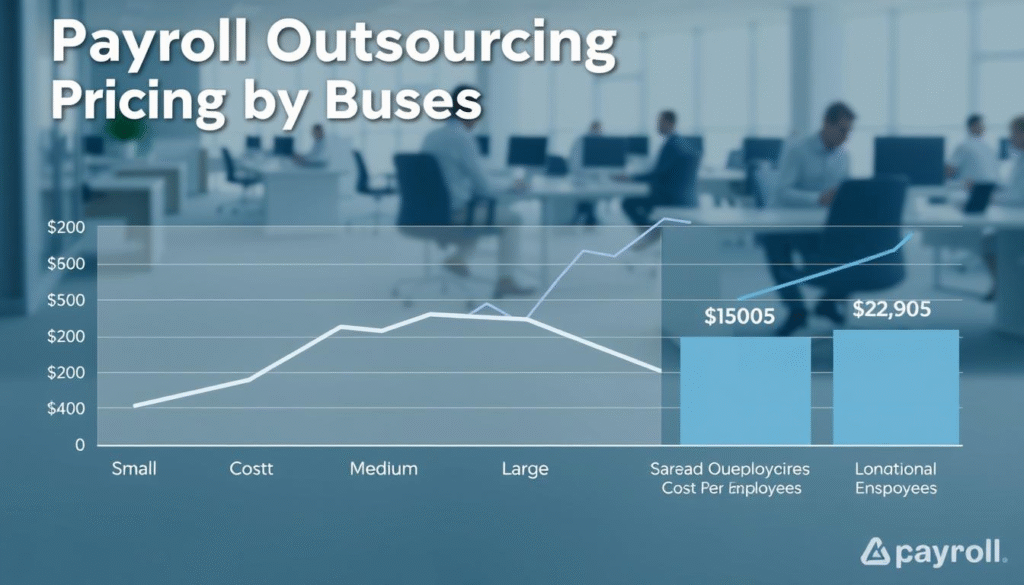
Small businesses with under 50 employees typically spend between $200 to $500 monthly on payroll outsourcing. This fee covers basic payroll processing, tax filings, and compliance services.
Mid-Sized Business Costs (50-199 Employees)
Mid-sized businesses, with 50 to 199 employees, face costs ranging from $500 to $1,500 monthly. The higher cost reflects the increased volume of payroll transactions and potentially more complex needs.
Large Business Costs (200+ Employees)
Large businesses with 200 or more employees usually incur higher costs, from $1,500 to $5,000 or more monthly. These expenses vary based on payroll complexity, number of locations, and additional services needed.
Industry-Specific Cost Variations
Payroll outsourcing costs also differ by industry due to regulatory requirements, payroll complexity, and other factors. For example, financial sector businesses or those with complex benefits may face higher costs.
When evaluating payroll outsourcing costs, consider your specific needs and the services included. Understanding these aspects helps determine if outsourcing payroll is suitable for your business and its cost implications.
Breaking Down the Costs: What You’re Paying For
To effectively budget for payroll outsourcing, understanding the services included is key. Payroll outsourcing costs encompass several essential components. Each part contributes to the total expense.
Core Payroll Processing Fees
Core payroll processing fees form the base of outsourcing costs. They cover the essential services for processing employee payroll. This includes calculating wages, deductions, and taxes. The cost varies with the number of employees and payroll complexity.
Tax Filing and Compliance Costs
Tax filing and compliance costs are another critical factor. These services ensure businesses adhere to tax laws and regulations. This includes filing tax returns and making payments. The complexity of tax compliance affects the overall cost.
Employee Self-Service Portal Fees
Many providers offer employee self-service portals for payroll information access. While convenient, these portals may incur additional fees. Fees vary based on the provider and the number of employees using the service.
Setup and Implementation Costs
Setup and implementation costs are one-time fees for starting payroll outsourcing services. These cover payroll data transfer, system setup, and HR training. The complexity of the setup process influences these costs.
Understanding these components is vital for businesses to accurately assess payroll service prices. This knowledge aids in making informed decisions about payroll outsourcing. Using an outsource payroll cost calculator can also help estimate costs more effectively.
- Core payroll processing fees
- Tax filing and compliance costs
- Employee self-service portal fees
- Setup and implementation costs
By dissecting these costs, businesses can better manage payroll outsourcing complexities. This enables them to select a service that aligns with their needs and budget.
Additional Services and Their Price Points
Many providers offer more than just basic payroll processing. These additional services can enhance the value of outsourcing. It’s essential for businesses to understand the costs and benefits of these extras.
Time and Attendance Integration
Time and attendance integration is a valuable service. It automates tracking employee hours, reducing errors and boosting efficiency. The cost varies from $5 to $15 per employee per month, based on the system’s complexity and the provider.
Benefits Administration
Outsourcing benefits administration to payroll providers is another option. This includes managing health insurance, retirement plans, and other employee perks. The cost can range from $2 to $10 per employee per month, depending on the services.

HR Support Services
HR support services offer expert advice on human resources. This includes compliance, employee relations, and talent management. It’s valuable for small to medium-sized businesses without a dedicated HR department. Costs range from $100 to $500 per month, based on the services needed.
Workers’ Compensation Administration
Workers’ compensation administration manages claims and ensures compliance with regulations. It’s critical for businesses in high-risk industries. Costs vary from $50 to $200 per month, depending on the complexity and provider.
| Additional Service | Typical Cost Range |
| Time and Attendance Integration | $5-$15 per employee/month |
| Benefits Administration | $2-$10 per employee/month |
| HR Support Services | $100-$500 per month |
| Workers’ Compensation Administration | $50-$200 per month |
Understanding the costs and benefits of these services is key when evaluating payroll outsourcing fees and choosing an affordable payroll outsourcing provider. By carefully considering these extras, companies can make informed decisions that meet their needs while staying within budget.
How to Use a Payroll Outsourcing Cost Calculator
Companies aiming to outsource payroll must first estimate costs accurately. A reliable calculator is essential for this purpose. It helps businesses predict expenses based on their operational specifics.
Finding Reliable Cost Estimation Tools
Seeking a payroll outsourcing cost calculator from a reputable source is critical. Look for tools provided by well-known payroll service providers. These calculators are usually found on the provider’s website. They aim to offer a clear cost estimate to prospective clients.
Information You’ll Need to Provide
To receive a precise estimate, you must provide certain details about your business. This includes the number of employees, pay frequency, and any extra services needed. Examples are tax filing or benefits administration.
Interpreting the Results
After inputting the required information, the calculator will give you an estimate of costs. It’s important to note that this is just an estimate. Actual costs could differ based on your specific needs and the provider’s pricing.
Utilizing a payroll outsourcing cost calculator effectively aids in comparing different providers. It enables businesses to make informed decisions about their payroll outsourcing needs.
Hidden Costs to Watch For When Outsourcing Payroll
Outsourcing payroll might appear to save money at first glance. Yet, several hidden costs can significantly increase the total cost. Initial quotes might seem appealing, but various factors can elevate the expense of outsourcing payroll.
Year-End Processing Fees
Year-end processing fees are a significant hidden cost. These can range from $100 to $500 or more. The exact amount depends on the provider and the complexity of your payroll.
Contract Termination Penalties
Another cost to be mindful of is contract termination penalties. If you choose to switch providers or handle payroll in-house, you might face a hefty fee for early termination.

System Integration Costs
System integration costs can also accumulate. You may need to invest in specific software or hardware to ensure smooth integration with your payroll provider’s system.
Support and Service Level Fees
Some providers charge extra for premium support or service level agreements. These fees can vary widely. It’s vital to understand what’s included in your contract to avoid unexpected expenses.
| Hidden Cost | Average Cost |
| Year-End Processing Fees | $100-$500 |
| Contract Termination Penalties | $500-$2,000 |
| System Integration Costs | $500-$1,000 |
To effectively compare payroll outsourcing costs, it’s essential to factor in these hidden costs. Understanding the additional expenses helps in making an informed decision about outsourcing payroll for your business.
Cost Comparison: In-House vs. Outsourced Payroll
For businesses, understanding the cost of payroll processing is key when choosing between handling it in-house or outsourcing. This analysis looks at different costs to find the most economical option.
Direct Labor Costs
In-house payroll comes with direct labor costs. It requires staff for payroll processing, tax compliance, and other tasks. A study shows the average yearly salary for a payroll clerk in the U.S. is about $42,000. Outsourcing payroll can cut these labor costs by eliminating the need for in-house staff.
Software and Technology Expenses
In-house payroll also means big expenses for software and technology. Companies must buy payroll software, hardware, and infrastructure. “Payroll software can cost anywhere from $20 to $200 per month, depending on the complexity and features.” Outsourcing payroll often includes access to advanced technology without the initial cost.
Training and Compliance Costs
Staying compliant with payroll regulations is vital. In-house teams need constant training to keep up with law changes. “The cost of non-compliance can be significant, with penalties ranging from $100 to $10,000 or more per violation.” Outsourced providers, with their expertise, can lower these risks and costs.
Error and Penalty Risk Assessment
Errors and penalties are another consideration. In-house payroll is more likely to have mistakes due to human errors or outdated data. As
“One study found that nearly 60% of companies experience payroll errors each year, resulting in significant financial losses.”
Outsourcing payroll to experienced providers can lower these risks. They have systems in place to reduce errors.
How to Choose a Cost-Effective Payroll Provider
Choosing the right payroll provider is essential for businesses. It’s about finding a balance between cost and quality. To do this, businesses need to evaluate providers based on several key factors.
Evaluating Provider Pricing Transparency
Transparent pricing is a must when selecting a payroll provider. A clear pricing model indicates a provider’s commitment to value. Here are some points to consider:
- Understand the base fee and any additional costs
- Check for any hidden fees or charges
- Compare pricing models among different providers
Assessing Service Quality vs. Cost
Cost is important, but service quality is equally vital. A low-cost provider may not always be the best choice. Look at these factors:
- Evaluate the provider’s reputation and customer reviews
- Assess the range of services offered
- Check the level of customer support
Reading Contract Terms Carefully
Before signing, read the contract terms thoroughly. Pay attention to:
- Contract duration and termination clauses
- Any penalties for early termination
- Service level agreements (SLAs)
Requesting Customized Quotes
Requesting customized quotes is key to understanding costs. This allows for a fair comparison of prices and services.
By following these steps, businesses can make an informed choice. This ensures they get the best value for their money.
Conclusion: Is Outsourcing Payroll Worth the Cost?
Businesses often ponder whether outsourcing payroll is a wise investment. The choice hinges on several factors, including cost, convenience, and compliance risks. Each plays a significant role in the decision-making process.
Outsourcing payroll can bring numerous advantages, like less administrative work and better compliance. Yet, the cost is a major concern for companies. To make a well-informed choice, businesses must compare payroll outsourcing costs. They should also assess the value that different providers offer.
When evaluating the value of outsourcing payroll, companies must consider their unique needs and situations. For some, the advantages of affordable payroll outsourcing might justify the expenses. Others might find that handling payroll internally is more economical.
In conclusion, the decision to outsource payroll should be made after a detailed analysis of costs and benefits. By carefully weighing these factors, businesses can make a choice that aligns with their financial and operational objectives.
Sources
For more information on payroll outsourcing costs and benefits, refer to the following resources:
- Payroll Outsourcing Association
- ADP Payroll Outsourcing Cost
- G2 Crowd Payroll Outsourcing Reviews
- Paychex Payroll Outsourcing Cost
These sources offer valuable insights into the costs of payroll outsourcing. They can assist businesses in making informed decisions.
FAQ
What is the average cost of outsourcing payroll services?
The cost of outsourcing payroll services varies. It depends on the business size, complexity, and the provider. Small businesses with 1-49 employees might pay between $30 to $150 monthly. Mid-sized businesses, with 50-199 employees, could spend $100 to $500 monthly. Large businesses, with 200+ employees, might pay $500 or more monthly.
How do payroll outsourcing providers charge for their services?
Providers charge in different ways. They might use a per-employee-per-month (PEPM) model, a base fee plus per-check, or tiered pricing. The choice depends on the business’s size, complexity, and needs.
What factors influence the cost of outsourcing payroll?
Several factors affect the cost of outsourcing payroll. These include company size, number of employees, pay frequency, and complexity. Additional services, location, and industry also play a role. Understanding these can help manage costs effectively.
Are there any hidden costs associated with payroll outsourcing?
Yes, hidden costs can occur. These include year-end processing fees, contract termination penalties, and system integration costs. Support and service level fees are also possible. Businesses should review contracts carefully to avoid these costs.
How can I compare the costs of different payroll outsourcing providers?
To compare costs, businesses should look at pricing transparency and service quality. They should read contract terms and request customized quotes. This helps find the best value for their money.
What is the cost comparison between in-house and outsourced payroll?
Comparing in-house and outsourced payroll involves several factors. Direct labor costs, software expenses, training, and compliance are key. Outsourcing can be more cost-effective, mainly for small and mid-sized businesses.
Can I use a payroll outsourcing cost calculator to estimate costs?
Yes, cost calculators can estimate costs. Businesses should find reliable tools, provide necessary information, and interpret results carefully. This ensures accurate estimates.
What additional services do payroll outsourcing providers offer?
Providers often offer more than just payroll services. They may include time and attendance integration, benefits administration, HR support, and workers’ compensation administration. These services add value to outsourcing payroll.
How do I choose a cost-effective payroll provider?
To choose a cost-effective provider, evaluate pricing transparency and service quality. Read contract terms and request customized quotes. This ensures a provider that meets needs and budget.