
Did you know digital payment transactions are expected to hit $6.7 trillion by 2024? Online shopping and digital wallets are on the rise. This makes payment security a big worry for both consumers and businesses.
Tokenization is changing the game. It makes transactions faster and safer, cutting down fraud risks. It works by swapping sensitive info with a unique token, keeping digital payments safe and sound.

Key Takeaways
- Tokenization boosts payment security in digital deals.
- It makes digital payments quicker and safer.
- It lowers fraud risks in online buys.
- Digital wallets get a big plus from tokenization.
- Tokenization is key for secure online transactions.
Understanding the Digital Payment Security Landscape
The world of digital payment security is getting more complex. As more digital transactions happen, so do the threats to payment systems.
Current Security Challenges in Digital Payments
Digital payment security faces many challenges. These include advanced cyberattacks and weak spots in payment systems. The global cost of online payment fraud is expected to hit US$206 billion by 2025, up from US$130 billion in 2020. This shows how serious the problem is.
The Rising Cost of Payment Data Breaches
Data breaches in the payment industry have big financial and reputational costs. The effects can be seen in several areas:
Financial Impact
The financial hit from data breaches includes direct costs like paying off affected customers. There are also indirect costs, like spending more on security. Studies show the average cost of a data breach is going up, making things harder for businesses.
Reputational Damage
Reputational damage from data breaches can last a long time. It can hurt customer trust and loyalty. A single breach can really hurt a company’s brand and keep customers away.
| Year | Global Cost of Online Payment Fraud (US$ Billion) |
| 2020 | 130 |
| 2025 | 206 |
“The increasing complexity of digital payment systems demands enhanced security measures to protect against evolving threats.”
What is Tokenization and Why It Matters
Tokenization is changing how we make digital payments. It offers a safe way to keep sensitive info, like credit card numbers, secure. Instead of using real payment info, it uses a unique “token” that doesn’t hold any actual data.
Definition and Core Concepts
Tokenization is a way to keep data safe by replacing it with a token. This token is a stand-in for the real data. The real data is then stored safely, often in a place called a token vault.
Key aspects of tokenization include:
- Replacing sensitive data with a token
- Storing the original data in a secure token vault
- Using the token as a reference in transactions
How Tokenization Differs from Encryption
Tokenization and encryption both protect data, but they work in different ways. Encryption changes data into something unreadable. Tokenization, on the other hand, swaps the data for a token.
“Tokenization is not encryption, though both are used for data protection. The key difference lies in how they handle the original data.”
Types of Tokenization Systems
There are different ways to make and manage tokens in tokenization systems.
Format-Preserving Tokens
Format-preserving tokenization keeps the token’s format the same as the original data. For example, a credit card number tokenized this way would look like a 16-digit number.
Non-Format-Preserving Tokens
Non-format-preserving tokenization makes tokens that don’t look like the original data. This adds an extra layer of security because the token doesn’t look like the real data.
| Tokenization Type | Description | Example |
| Format-Preserving | Tokens retain the original data format | Credit card number: 1234-5678-9012-3456 becomes 9876-5432-1098-7654 |
| Non-Format-Preserving | Tokens do not retain the original data format | Credit card number: 1234-5678-9012-3456 becomes TKN-001234 |
The Tokenization Process Explained
The tokenization process is key to making digital payments safe. It involves several steps to protect sensitive info.
Step1: Data Capture and Validation
The first step is data capture and validation. It collects payment info from customers and checks if it’s right. Data preprocessing makes sure the data is clean and ready.
Step2: Token Generation and Assignment
After checking the data, a token is generated and linked to the data. This token replaces the real info, making it safe from hackers.
Step3: Token Storage and Management
The tokens are kept in a token vault, a secure place. This vault manages and guards the tokens, making sure they’re used right in future deals.
Step4: Token Utilization in Transactions
When a deal starts, the token is pulled from the vault and used instead of real payment info. This keeps sensitive data safe during the deal.
By following these steps, businesses can make their digital payment systems much safer.
Implementing Tokenization in Your Payment Systems
As digital transactions grow, it’s key to protect sensitive info with tokenization. First, businesses must check their current payment setup.
Assessing Your Current Payment Infrastructure
Looking at your current payment systems is key. You need to see how data flows and find any weak spots. Also, you must know what secure transactions need.
Selecting the Right Tokenization Solution
Choosing the right tokenization solution is important. You should think about:
- In-House vs. Third-Party Solutions: Decide if you want to handle tokenization yourself or use a third-party.
- Cost Considerations: Know the costs of different solutions. This includes the initial cost and what you’ll pay over time.
| Solution Type | Initial Cost | Ongoing Expenses |
| In-House | High | Maintenance, Updates |
| Third-Party | Lower | Service Fees |
Integration Planning
Good integration planning means mapping out the tokenization process. It also includes training staff and testing the system. Machine learning can make tokenization more secure and efficient.
Step-by-Step Guide to Setting Up Tokenization
Setting up tokenization is key to making your digital payments safer. It involves several important steps for secure transactions.
Preparing Your Systems for Integration
Before starting tokenization, check your current payment systems. Look at which systems will work with the tokenization solution. Make sure they can be integrated.
Configuring Your Token Vault
The token vault is a vital part of the system. It keeps sensitive data safe. Setting it up means creating secure storage and management for the data.
Setting Up Security Parameters
Security is at the heart of tokenization. You need to set up encryption, access controls, and authentication. This keeps data safe from unauthorized access.
Testing Your Implementation
Testing is a must in tokenization setup. It checks if the system works right and is secure.
Test Cases to Consider
- Successful token generation and assignment
- Secure storage and retrieval of tokens
- Transaction processing with tokenized data
Common Implementation Errors
- Insufficient security measures
- Incompatible system integrations
- Inadequate testing protocols
Going Live with Tokenization
After testing, if everything checks out, you can go live. This means using the system in real-world scenarios and watching how it performs.
By following these steps, businesses can make their digital payments safer with tokenization.
Tokening Standards and Compliance Requirements
Tokenization is a key technology in digital payments. It follows various standards and compliance rules. For businesses, knowing these rules is key to secure and compliant payment processing.
PCI DSS Requirements for Tokenization
The Payment Card Industry Data Security Standard (PCI DSS) guides tokenization. It focuses on keeping sensitive payment info safe. PCI DSS makes sure tokenization solutions protect cardholder data well.
“Tokenization is a critical component in reducing the scope of PCI DSS compliance by replacing sensitive cardholder data with a unique token.” – PCI Security Standards Council
EMV Tokenization Standards
EMVCo sets guidelines for tokenization to ensure payment systems work together securely. These standards are key in the payment industry for safe transactions.
Regulatory Considerations by Region
Each region has its own rules for tokenization. It’s vital for global businesses to know these differences.
North American Requirements
In North America, businesses must follow PCI DSS and local laws. EMV tokenization is also common, making payments more secure.
European Requirements
Europe has its own rules, like the Payment Services Directive (PSD2). It requires strong customer authentication and secure communication. Tokenization is essential to meet these standards.
| Region | Regulatory Requirement | Tokenization Standard |
| North America | PCI DSS | EMV Tokenization |
| Europe | PSD2 | EMV Tokenization |
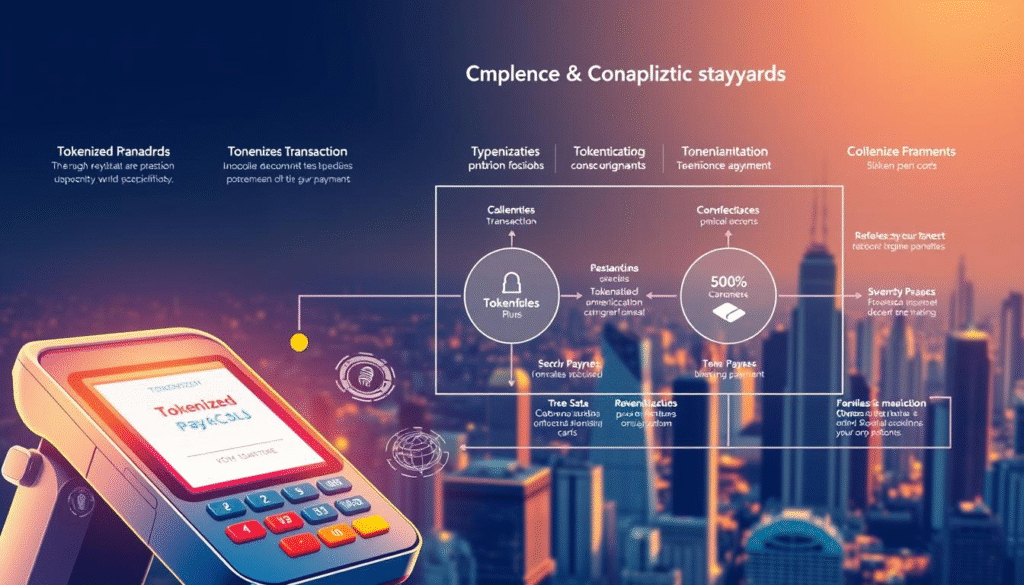
By following these tokenization standards and rules, businesses can keep their digital payments safe and secure.
Key Benefits of Tokenization for Businesses
Businesses that use tokenization see big improvements in payment security and customer trust. Tokenization is a strong answer to the problems of keeping digital payments safe.
Reduced PCI Compliance Scope
One big plus of tokenization is it cuts down on PCI compliance needs. By swapping out real payment info for tokens, companies can lessen their PCI DSS work. This means lower costs and less hassle.
Enhanced Customer Trust and Loyalty
Tokenization makes customers feel safer, which builds trust. When people know their data is safe, they stick with the business. This leads to more loyal customers.
Lower Risk of Data Breaches
Tokenization makes it much harder for hackers to get to payment info. This means less chance of data breaches and big savings for the business.
Improved Transaction Approval Rates
Tokenization also helps get more transactions approved. It makes payment data safer, which means smoother transactions and higher approval rates.
Operational Efficiency Gains
Lastly, tokenization makes businesses run better. It makes payment processing faster and cuts down on security needs. This leads to more efficiency.
Tokenization in E-commerce Applications
Tokenization is changing how e-commerce handles customer data. It replaces sensitive info with unique tokens. This makes e-commerce platforms more secure and builds trust with customers.
Cart Abandonment Reduction Strategies
Cart abandonment is a big problem for e-commerce sites. Tokenization helps by making checkout faster. Customers don’t have to enter their payment info every time, making shopping smoother.
Secure Recurring Billing Solutions
For subscription services, tokenization is key for safe billing. It keeps customer data safe while allowing regular payments. This is a big win for merchants.

Cross-Channel Payment Experiences
Tokenization makes payments smooth across all channels. Whether online, through an app, or in-store, payments are consistent and secure. This boosts the customer experience.
Customer Experience Improvements
Tokenization makes payments quicker and easier. This leads to happier customers who are more likely to shop again. A smooth checkout process is a big plus.
| Benefits | Description |
| Reduced Cart Abandonment | Streamlined checkout process |
| Secure Recurring Billing | Protected customer data for subscriptions |
| Cross-Channel Payments | Seamless experience across platforms |
As e-commerce grows, tokenization will play a bigger role. It will improve security, enhance the customer experience, and boost business efficiency.
Mobile Payment Tokenization
Mobile payments are getting more popular, and security is key. Tokenization is a strong security measure. It secures NFC and contactless payments, protects in-app purchases, and works with digital wallets.
NFC and Contactless Payment Security
NFC technology lets users make payments with a simple tap. Tokenization makes these payments safer by using a unique token instead of real payment info.
In-App Purchase Protection
In-app purchases are common in mobile apps. Tokenization keeps these purchases safe by hiding sensitive payment data.
Digital Wallet Integration Methods
Digital wallets like Apple Pay and Google Pay use tokenization. Tokenization makes transactions safer by replacing real card numbers with a token.
Apple Pay uses tokenization for secure transactions. It offers a safe and easy way to pay.
Google Pay Implementation
Google Pay also uses tokenization to protect payment info. This makes mobile transactions more secure.
Advanced Tokenization Use Cases
Tokenization is changing many industries in big ways. It works by swapping out sensitive info with unique tokens. This makes businesses much safer.
Omnichannel Retail Solutions
In omnichannel retail, tokenization makes buying things online or in stores easy and safe. It makes the checkout process smoother for customers.
Subscription Service Security
For services you pay for every month, tokenization keeps your payments safe. It cuts down on the chance of data theft and keeps you in line with rules.
B2B Payment Applications
In B2B payments, tokenization makes dealing with money easier. It keeps financial info safe, which is key when you’re handling lots of money.
Healthcare Payment Security
Tokenization also helps a lot in healthcare payments. It keeps patient payment info safe, which is very important for health care providers.
Overcoming Common Tokenization Challenges
Businesses face many challenges when they start using tokenization. This method is great for making payments safer. But, it needs careful planning to work well.
Legacy System Integration Hurdles
One big challenge is making tokenization work with old systems. This can be hard because of outdated tech or compatibility problems. To solve this, businesses should check their systems and find the best way to integrate.
Token Management Complexity
Managing tokens well is key to tokenization’s success. This means keeping tokens safe, easy to get, and knowing when to replace them. A good token management system can make this easier.
Performance Optimization Techniques
Tokenization can slow down transactions sometimes. To fix this, businesses can use tricks like caching, load balancing, and making database queries faster.
| Technique | Description | Benefit |
| Caching | Storing frequently accessed data in memory | Faster data retrieval |
| Load Balancing | Distributing workload across multiple servers | Improved system reliability |
| Database Optimization | Optimizing database queries for efficiency | Reduced processing times |
Balancing Security and User Experience
It’s important for businesses to keep payments safe with tokenization. But, they also need to make sure users have a good experience. This means making login easy and keeping transactions smooth.
Training Staff on New Processes
Lastly, training staff on tokenization is vital. Good training helps employees understand and use the new system effectively.
Conclusion
Tokenization is a key technology for better digital payment security. It replaces sensitive data with unique tokens. This makes businesses less vulnerable to data breaches and builds trust with customers.
The advantages of tokenization are many. It reduces the need for PCI compliance, boosts transaction approval rates, and makes operations more efficient. As digital payments grow, using tokenization is a smart way to keep transactions safe and data protected.
Tokenization is a vital tool for businesses to strengthen their payment systems. It helps create a secure space for digital payments to flourish.
Sources
For more on tokenization and its use in digital payments, check out these sources. They offer valuable insights and data.
Some key references include:
- PCI Security Standards Council
- EMVCo
- National Institute of Standards and Technology (NIST)
These sources give detailed guidance on tokenization standards and compliance. They also share best practices for using tokenization in different payment systems.
FAQ
What is tokenization in the context of digital payments?
Tokenization is a way to keep payment info safe. It changes sensitive details like credit card numbers into unique tokens. These tokens can’t be read by unauthorized people, making payments safer and reducing the chance of data theft.
How does tokenization differ from encryption in securing digital payments?
Tokenization and encryption both protect data, but in different ways. Encryption makes data unreadable but can be unlocked with a key. Tokenization, on the other hand, replaces sensitive data with tokens that have no value. This makes digital transactions even safer.
What are the benefits of implementing tokenization in e-commerce applications?
Tokenization in e-commerce can lower cart abandonment rates. It makes checkout secure. It also allows for safe recurring payments and cross-channel payment experiences. This builds trust and loyalty, helping businesses grow.
How does tokenization impact PCI DSS compliance requirements?
Tokenization can greatly reduce PCI DSS compliance needs. It replaces sensitive payment data with tokens. This means fewer systems need to meet compliance standards, making the process simpler.
What are some common challenges associated with implementing tokenization, and how can they be addressed?
Challenges include integrating with old systems and managing tokens. It’s also important to balance security with user experience. To overcome these, plan carefully, choose the right solution, and use strong token management.
How does tokenization enhance customer trust and loyalty in digital payments?
Tokenization offers a secure payment experience. This shows businesses care about protecting customer data. This builds trust and loyalty, leading to stronger customer relationships over time.
What role does tokenization play in mobile payment security, particular with NFC and contactless payments?
Tokenization is key in keeping mobile payments safe, like NFC and contactless. It protects sensitive payment info during transactions. This prevents data breaches and keeps payments secure.